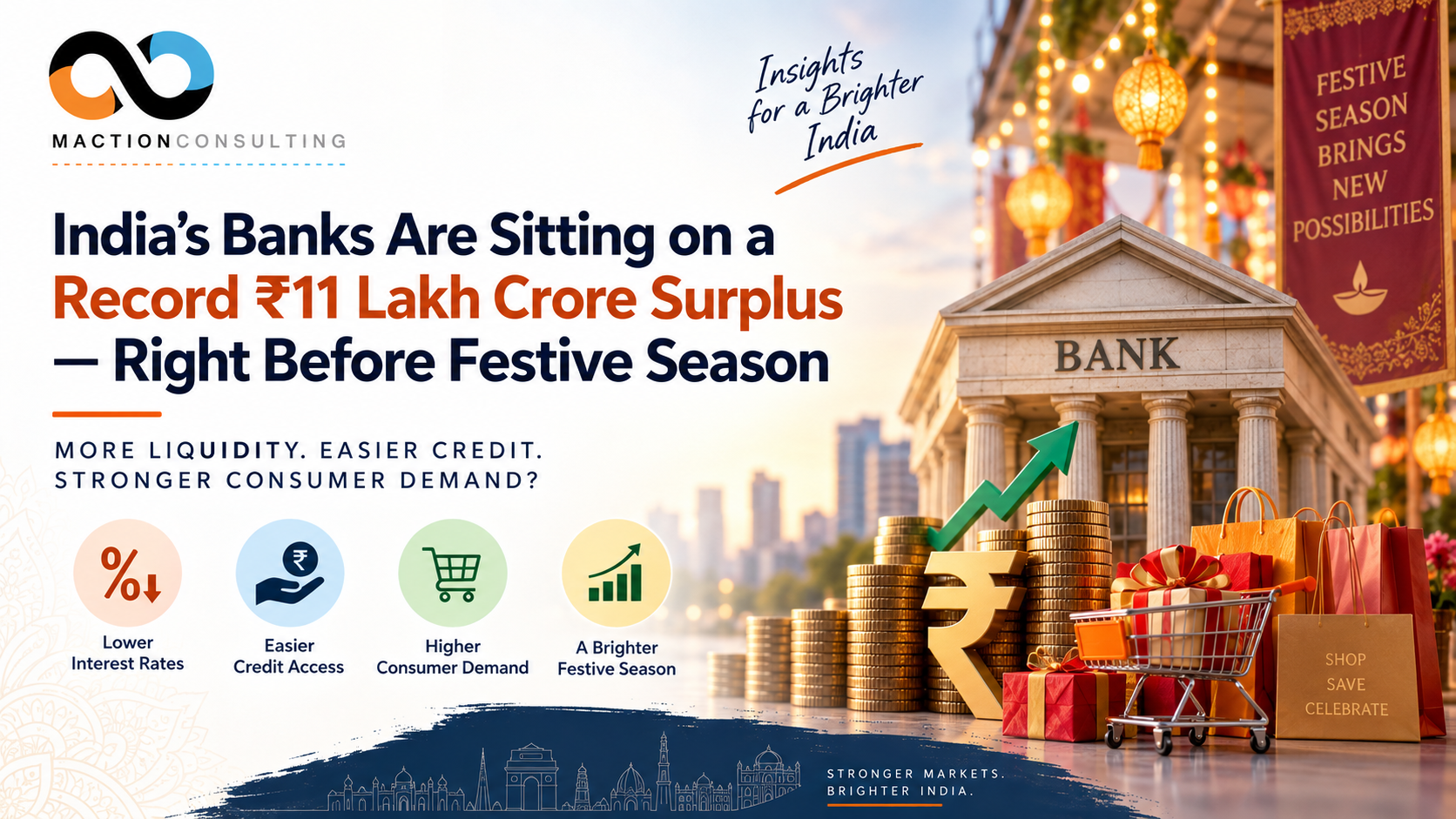

India’s banking system is sitting on the largest cash surplus in its recorded history — roughly ₹11 lakh crore, or $115 billion, in excess rupee liquidity — and the RBI began actively draining it this week through foreign exchange swaps. The surplus traces back to an NRI deposit scheme that badly underestimated its own popularity: the RBI hoped for around $80 billion in foreign-currency inflows when it launched a concessional deposit window in June, offering up to 7% tax-free returns with the central bank absorbing the currency-hedging cost. It got $136.4 billion instead, more than 60% above target, and closed the window a full month early. The resulting flood of rupees into the banking system is, on its own, a monetary-policy story. But it’s landing at almost exactly the moment India’s festive season begins, and that timing is the part worth a consumer researcher’s attention.
Why a Bank Liquidity Story Is Actually a Consumer Demand Story
Excess reserves sitting in the banking system put downward pressure on short-term interest rates, and analysts at Jefferies are already flagging that the liquidity surge should push bank wholesale funding costs lower and compress net interest margins in the near term. In plainer terms: banks are currently flush with cash they need to deploy, and cheaper funding costs typically translate into more competitive lending rates and looser credit conditions — exactly the ingredients that fuel consumer durables financing, auto loans, and EMI-driven purchases. Festive season is India’s single biggest annual window for EMI-financed buying, spanning consumer electronics, appliances, and vehicles. A banking system this eager to lend, arriving at this specific moment on the calendar, is not a coincidence a category tracker should ignore.
The RBI Itself Is Watching the Inflation Risk This Creates
It’s worth being precise about what the RBI is and isn’t worried about here. A liquidity surplus of this scale can loosen credit faster than the real economy can productively absorb it, which is a genuine demand-side inflation risk — and the central bank’s own framing acknowledges this directly, which is why it chose to drain the surplus through short-term FX swaps rather than let it sit. That’s a delicate balance for research purposes: the same mechanism that could make EMI financing more attractive and available for festive purchases is also the mechanism the RBI is actively working to contain, specifically because it doesn’t want credit-fuelled demand adding to the inflation pressure already building from fuel and food prices. Category and durables research over the next two months is effectively watching two forces pull in opposite directions at once.
This Is a Temporary Window, Not a Structural Shift
The RBI’s drainage tool — sell-buy FX swaps — is explicitly temporary by design: the swaps maturing in September and October will return the drained rupees to the banking system unless further absorption operations are in place. That maturity schedule roughly overlaps with the Navratri-to-Diwali festive window itself, which means the liquidity backdrop banks and lenders are operating under could shift meaningfully within the same festive season, not just before it. A financing offer or EMI scheme a brand’s banking partner is willing to extend generously in late September may look different by the time Diwali arrives in November, depending on how the RBI’s absorption operations play out in the interim.
What This Means for Category and Durables Research Right Now
- Track EMI and financing-scheme availability directly, not just discount depth, for categories where financed purchases matter — consumer durables, two-wheelers, and electronics. A loosening credit environment can shift purchase decisions independently of a product’s sticker price or promotional discount.
- Watch for financing terms to tighten mid-season, not just before it. With the RBI’s drainage operations maturing on a rolling basis through September and October, brands relying on aggressive bank-partner financing offers for late-season Diwali sales should confirm those terms hold, rather than assuming September’s credit environment persists unchanged into November.
- Test whether easier financing genuinely expands the buyer pool, or simply pulls forward purchases that were already planned. A loosening credit environment can either bring in marginal, previously-priced-out buyers or simply change the timing of committed buyers — and those are different demand stories with different implications for inventory planning.
- Cross-reference this against the Q1 FY27 GDP and August GST data, both of which pointed to investment and import activity outpacing domestic consumption growth — a liquidity-driven credit loosening could be one of the more direct channels through which that broader economic strength actually reaches the festive-season consumer.
Frequently Asked Questions
Q: What is India’s banking system liquidity surplus in 2026?
India’s banking system accumulated roughly ₹11 lakh crore ($115 billion) in excess rupee liquidity — the largest surplus in recorded history. The surplus traces back to an RBI-launched NRI deposit scheme in June 2026 that attracted $136.4 billion in foreign-currency inflows, over 60% above the $80 billion target. The window was closed a full month early, and the resulting flood of rupees into the banking system prompted the RBI to begin draining the surplus through foreign exchange swaps.
Q: How does a banking liquidity surplus affect festive season consumer demand?
Excess banking liquidity puts downward pressure on short-term interest rates and wholesale funding costs, which typically translates into more competitive lending rates and looser credit conditions. For festive season, this means EMI financing for consumer durables, electronics, appliances, and vehicles may be more readily available and competitively priced — making financed purchases more accessible to a broader buyer pool during India’s single biggest annual EMI-driven spending window.
Q: Is the banking liquidity surplus a permanent condition?
No — it’s explicitly temporary. The RBI’s drainage tool, sell-buy FX swaps, is designed to be reversed: swaps maturing in September and October will return drained rupees to the banking system unless further absorption operations are in place. This maturity schedule overlaps directly with the Navratri-to-Diwali festive window, meaning the credit and financing backdrop could shift meaningfully within the festive season itself — not just before it.
Q: What should brands with durables or electronics categories track during the 2026 festive season?
Four research priorities: EMI and financing-scheme availability directly, not just discount depth; whether financing terms tighten mid-season as RBI drainage operations mature; whether easier financing genuinely expands the buyer pool or simply pulls forward planned purchases; and how the liquidity tailwind interacts with the broader economic picture showing investment and import activity outpacing domestic consumption growth.
The Bigger Point
A record banking-system liquidity surplus landing right before India’s biggest consumer spending season is the kind of macro detail that rarely makes it into a category brief, but it has a fairly direct line to EMI availability, financing promotions, and durables demand — exactly the categories festive season leans on most heavily. It’s also a genuinely temporary condition, actively being managed down by the RBI on a timeline that overlaps with the festive season itself, which means the financing backdrop brands are planning against today may not be the same backdrop their bank partners are operating under by the time Diwali sales actually happen.
If you want a clearer read on how financing and credit conditions are likely to shape festive demand in your category, talk to our research team at Maction.