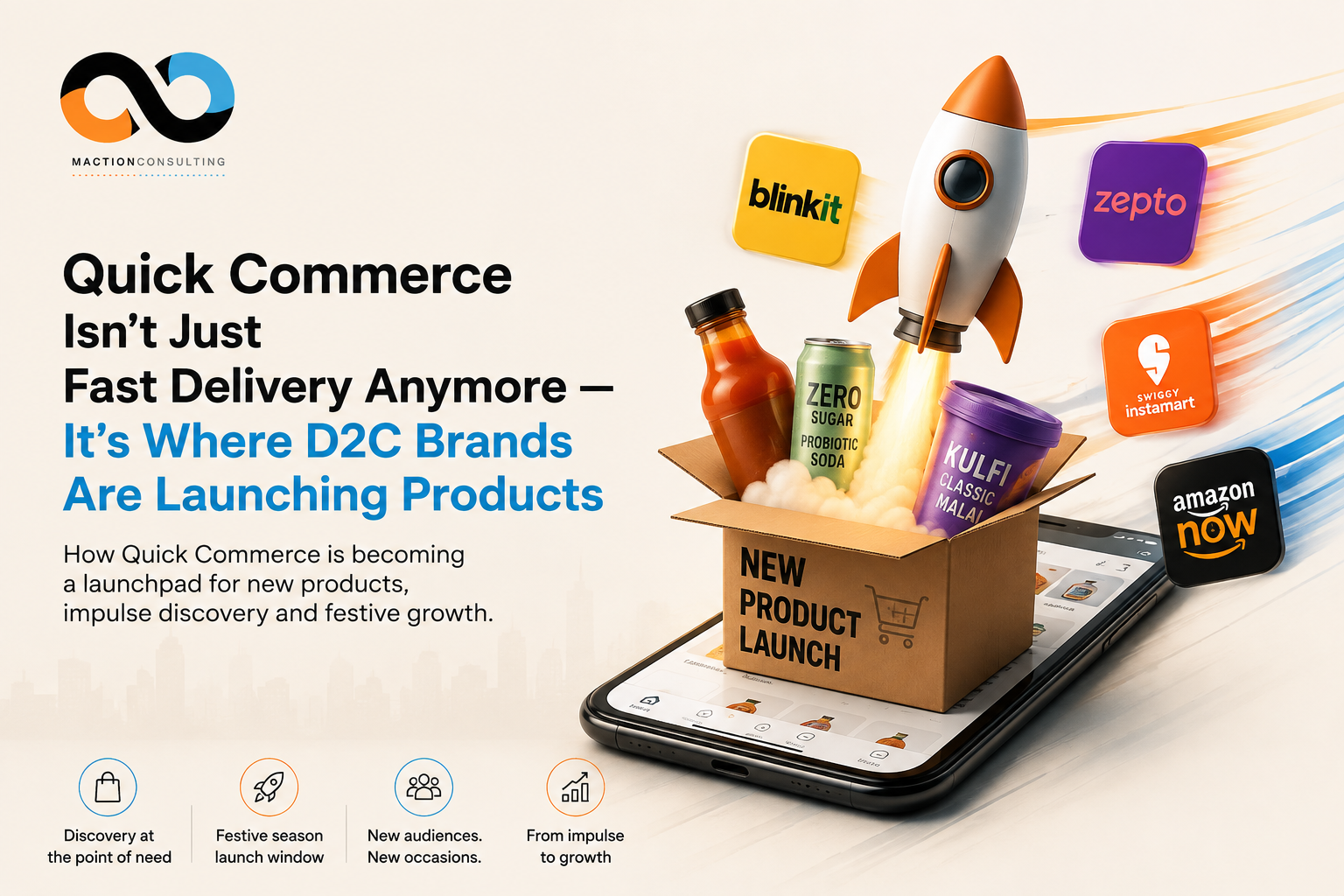

A wave of Indian D2C startups is using this festive season to launch new products — not on their own websites, not through a traditional retail rollout, but directly on Blinkit, Zepto, Swiggy Instamart, and Amazon Now. Ready-to-cook meat brand Zappfresh is debuting chicken marinades on Blinkit. Beverage startup Borécha is launching a zero-sugar probiotic soda on Swiggy Instamart before expanding to five other platforms. Frozen dessert brand 1.5 Degree is bringing kulfi to Zepto as its first-ever quick commerce listing. None of these are minor experiments — several brands expect the channel to drive 25-30% growth in their run-rate over the next two quarters. Quick commerce has quietly become something most category research hasn’t caught up to yet: a genuine product launch and discovery platform, not just a faster way to fulfil an order.
The Shift From Fulfilment Channel to Discovery Channel
The distinction matters more than it sounds. A fulfilment channel assumes the consumer already knows what they want and just needs it delivered fast. A discovery channel assumes the opposite — that the platform itself is where the consumer encounters something new, often on impulse, and decides to try it. Brand founders quoted on this shift are explicit that this is the actual value proposition: quick commerce puts new products “in front of consumers at the point of an impulse… decision,” as one beverage founder put it, and festive-season browsing behaviour on these apps is being treated as genuinely comparable to walking past an eye-catching shelf display in a store. For research purposes, that reframes quick commerce from a logistics question into a genuine marketing and product-testing channel.
Why Festive Season Specifically Is Becoming the Launch Window
Several founders point to the same underlying logic: festive shopping has become genuinely more spontaneous, and quick commerce is a near-perfect match for that behaviour. Gifting boxes, party accessories, festive snacks, and occasion-driven categories like frozen kulfi see demand spikes specifically because people are making last-minute decisions around celebrations, entertaining, and gifting — decisions that don’t tolerate a multi-day delivery wait. A kids’ food brand timing gifting boxes to Rakhi, a fashion startup expanding into wedding-season categories, and an electronics brand launching party speakers ahead of the season all point to the same pattern: quick commerce is becoming the default channel for occasion-triggered, low-planning purchases, which festive season produces in unusually high volume.
What This Means for Product and Category Research
If quick commerce is becoming a genuine launch channel, it changes what needs to be researched before a launch, not just after one. A handful of questions that matter here didn’t really exist as research priorities two years ago:
- Which categories are genuinely impulse-compatible on quick commerce, and which aren’t. Ready-to-cook food, occasion-driven desserts, and gifting products are showing strong quick commerce traction specifically because they suit spontaneous decisions — but not every category translates the same way, and testing that fit before committing launch inventory to the channel is a real research question.
- Platform-specific audience differences. A brand choosing to debut on Amazon Now versus Blinkit versus Zepto versus Swiggy Instamart is making a real positioning decision, not a logistics one — these platforms carry different user bases, browsing behaviours, and impulse-purchase patterns that deserve to be understood before a launch, not discovered after a disappointing one.
- Discovery-to-repeat conversion. A strong festive-season debut on a quick commerce app doesn’t automatically become a repeat customer relationship. Understanding what share of first-time quick commerce buyers convert into repeat purchasers, versus one-off impulse buyers, is now a meaningful post-launch research question for any D2C brand using this channel seriously.
- Cannibalisation versus incrementality. For D2C brands that already sell through their own website or other e-commerce channels, a quick commerce launch raises a genuine measurement question — is this channel adding new customers and occasions, or simply shifting existing demand to a faster, more convenient option?
A Note of Caution Alongside the Opportunity
This same week, a Zepto dark store in Bengaluru was sealed by authorities over unhygienic food storage conditions — a reminder that the infrastructure supporting this rapid category expansion is still maturing, particularly for food and perishable categories, which make up a meaningful share of the D2C brands rushing into the channel. For any brand launching food, beverage, or perishable products on quick commerce, understanding consumer trust and quality-perception specifically within this channel — separate from trust in the brand itself — is worth testing directly rather than assuming it transfers cleanly from a brand’s existing retail reputation.
Frequently Asked Questions
Q: Why are D2C brands launching products on quick commerce platforms first in India?
Quick commerce platforms like Blinkit, Zepto, and Swiggy Instamart put new products in front of consumers at the point of an impulse decision — comparable to a compelling shelf display in a physical store. Festive season browsing behaviour on these apps is particularly spontaneous, making the channel well-suited for occasion-driven, low-planning purchases. Several D2C brands expect quick commerce to drive 25–30% growth in run-rate over the next two quarters.
Q: Which product categories work best for quick commerce launches in India?
Ready-to-cook food, occasion-driven desserts, gifting products, festive snacks, and party accessories are showing strong quick commerce traction because they suit spontaneous, impulse-compatible decisions. Categories requiring considered evaluation, comparison, or high involvement tend to perform less well as quick commerce launches — the platform fit depends on how naturally the purchase decision maps to an impulse rather than a planned one.
Q: What is the difference between quick commerce as a fulfilment channel and a discovery channel?
A fulfilment channel assumes the consumer already knows what they want and needs it delivered fast. A discovery channel assumes the platform itself is where the consumer encounters something new and decides to try it — often on impulse. Quick commerce is increasingly functioning as a discovery channel, particularly during festive season, which changes what research questions matter before a launch on these platforms.
Q: What should brands research before launching on quick commerce in India?
Four priorities: impulse-compatibility of the category — does the product suit a spontaneous decision or does it require consideration? Platform-specific audience differences between Blinkit, Zepto, Swiggy Instamart, and Amazon Now; discovery-to-repeat conversion — what share of first-time buyers become repeat purchasers; and incrementality versus cannibalisation — is the channel adding new customers or shifting existing demand from other channels.
The Bigger Point
Quick commerce’s evolution from a convenience play into a genuine product-launch and discovery platform is happening faster than most category research frameworks have adjusted to. Brands treating a quick commerce listing as simply “another place to sell” are missing what the D2C startups leaning into this channel have already figured out — that platform choice, timing, and category fit are now genuine strategic decisions with their own research questions, not an afterthought to a launch plan built for traditional retail or e-commerce.
If you’re planning a product launch on quick commerce and want to test category fit, platform choice, or discovery-to-repeat conversion before committing inventory, talk to our research team at Maction.