
Black Friday is here. Flipkart’s sale has been running since November 21, and Amazon India’s was reported to begin today, with fashion, beauty, and electronics retailers running their own events through the weekend and Cyber Monday on November 30. For a sale imported from the United States, it has become a regular fixture on India’s shopping calendar. But it arrives only 19 days after Diwali, which fell on November 8. Shoppers have been offered discounts for weeks, and the research suggests they are starting to doubt them.
What the Research Says
Several recent surveys point the same way. They use different methods and cover different groups, so they should be read as a pattern, not added together.
|
Source |
What it found | Scope |
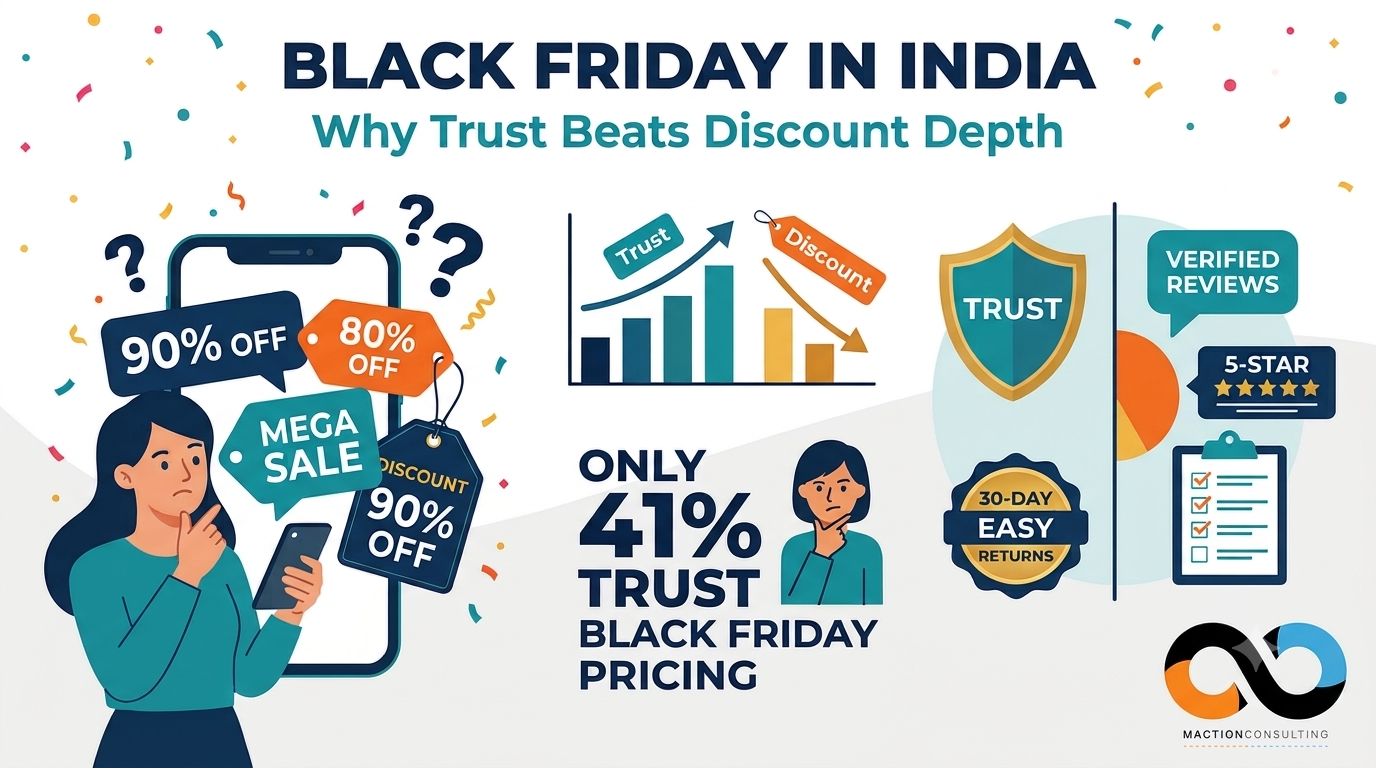
| DHL (via Exchange4media) | Only 41% of Indian shoppers trust Black Friday pricing. |
India |
|
YouGov (via Exchange4media) |
Among the minority who had cooled on mega sales, 51% blamed misleading discounts. | India |
| BCG, sixth annual Black Friday study | Only 54% of consumers trust that Black Friday discounts are lower than normal. One in five actively distrust advertised prices, and 22% plan to spend less or skip the events. |
10 countries, 10,220 consumers |
|
BCG, same study |
The discount shoppers expect before calling it a good deal eased to about 30%, from 32% in 2025. | 10 countries |
| LocalCircles, Mood for the Consumer 2026 | Urban households expected to spend Rs 1.97 lakh crore on festive discretionary purchases, down 6% from Rs 2.10 lakh crore in 2025. |
Urban India |
Ipsos’s 2026 view, The Rise of the Value Interpreter, makes a related point: in India, sales have stopped being events and become an environment. Consumers have adapted to promotions to the point that a bigger discount no longer feels bigger. The DHL and YouGov figures are as reported by Exchange4media, and we have not seen the original reports.
Why Discounts Stop Working
There are three reasons, and all three are about how people judge a price.
- Discount fatigue. When every brand is advertising big savings, the savings stop standing out. A shopper who has seen ‘up to 70% off’ for six weeks does not react to it the way they did in the first week.
- Doubt about the starting price. A discount is only as real as the price it is measured against. Here is a simple, made-up example. A product has a printed price of Rs 10,000 but has actually been selling at Rs 5,000 for the past month. On Black Friday it is advertised at Rs 4,500, which looks like 55% off. Measured against what it actually sold for, the saving is 10%. Shoppers who have noticed this before may start to doubt every sale.
- Rules against misleading tactics. India’s Central Consumer Protection Authority issued guidelines in 2023 that list 13 ‘dark patterns’, including false urgency, items slipped into baskets, and fees revealed only at the last step. A brand that uses countdown timers or low-stock warnings it can’t justify takes on both a trust risk and a compliance risk.
What Builds Trust Instead
BCG’s study of consumers in ten countries tested which practices make people more likely to believe a deal is real. It measured each with a net trust score: the share who say a factor makes them trust a deal more, minus the share who say it makes them trust it less.
|
What builds trust in a deal |
Net trust score (BCG) | In plain words |
|
Retailer reputation |
65% | Shoppers believe a brand they already trust |
| Money-back guarantee | 65% |
An easy return makes a deal feel less risky |
|
Verified purchase reviews |
59% | Reviews from real buyers carry weight |
| Clear regular vs discounted price | 58% |
Showing what the item normally costs |
| Influencer recommendations | Ranked last |
The least trusted of the factors tested |
The pattern is straightforward. Shoppers trust brands they already know, and they trust deals that feel safe, with easy returns, honest price comparisons, and reviews from real buyers. Influencer recommendations rank lowest. This is a global study, not an Indian one, but it lines up with what Indian shoppers are telling other surveys.
It Isn’t Only About Trust. Wallets Are Cautious Too.
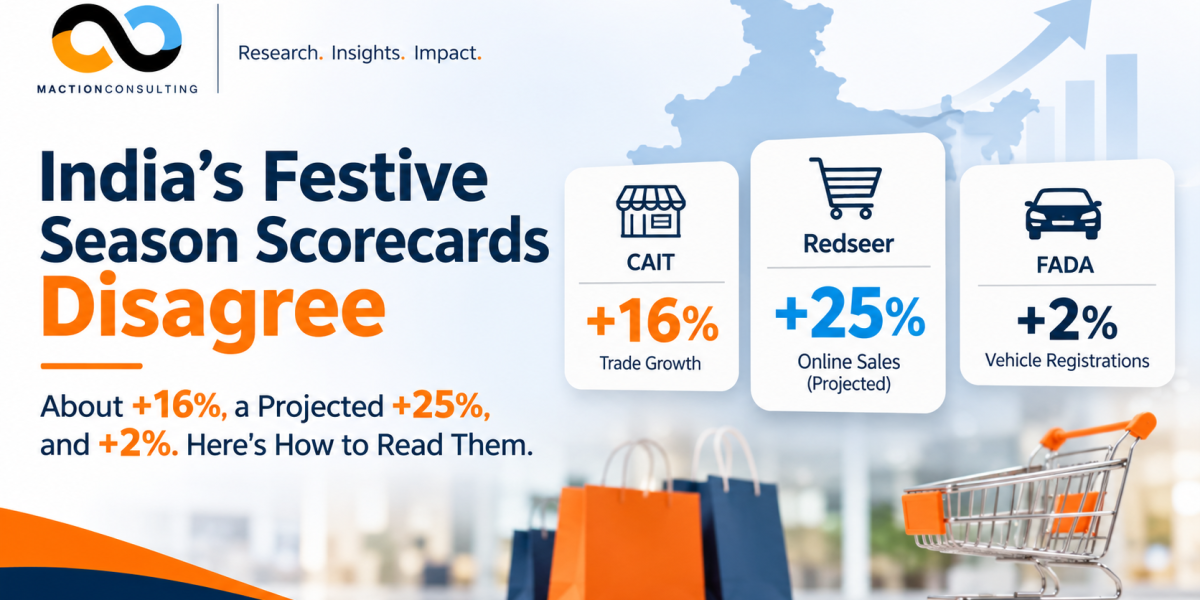
LocalCircles estimates that urban households will spend about 6% less on festive discretionary items this year than last. That sits alongside the other festive numbers we have looked at: the traders’ association CAIT’s estimate implies trade growth of about 16%, and vehicle registrations grew just 2.2%. Those figures measure different things, as we explained in our festive scorecards post, but together they suggest a shopper who is still buying while being more selective. Retail inflation reached 6.09% in October, and the RBI raised interest rates in October, so careful spending would not be surprising.
Eight Questions to Measure Discount Trust
Any brand can find out how its own customers see its sales. These eight questions work in a short survey or an interview guide. Adapt the wording to your category.
- Reference price: When you see ‘60% off,’ what price do you think it is being compared with?
- Checking behaviour: How often do you check a product’s price history before buying in a sale?
- Expected discount: Compared with the usual price, what is the smallest discount that would make you buy?
- Brand trust: How much do you trust the discounts that [brand] advertises? Use a five-point scale.
- Trust builders: Which of these would make you trust a sale price more: easy returns, price history, verified reviews, a clear regular price, a brand you know?
- Planned or unplanned: Was your last sale purchase something you had planned to buy anyway, or something you bought because of the sale?
- Waiting: Did you hold off on a purchase because you were waiting for a sale?
- Pressure: Did any timers or low-stock messages make you feel rushed? Did they affect your decision?
Questions 6 and 7 are especially useful. They help separate new demand from demand that was simply moved, and show whether customers are being trained to wait for sales.
How to Read Your Own Results
- Separate new demand from moved demand. Compare sale-period sales with the weeks before and after, and with what you sold during Diwali. A spike followed by a dip is borrowed demand.
- Look at margin after all offers, including bank offers and free shipping, not only the headline discount.
- Track returns and cancellations. A sale that produces many returns has sold less than it appears to.
- Check who comes back. Buyers who purchase again within a month are worth more than those who buy only on sale.
- Ask customers afterwards. Whether they felt they got a fair deal matters for the next sale, not just this one.
Frequently Asked Questions
Why are Indian shoppers becoming less responsive to Black Friday discounts?
Repeated promotional campaigns and doubts about advertised reference prices can make shoppers less responsive to large discount claims. Consumers may pay more attention to whether a deal offers genuine savings.
What is discount fatigue?
Discount fatigue occurs when consumers are repeatedly exposed to promotions and large discount claims, reducing the impact of those offers over time.
What makes consumers trust a discount?
Factors include retailer reputation, money-back guarantees, verified purchase reviews, transparent regular pricing and easy return policies.
How can brands measure consumer trust in discounts?
Brands can use surveys to understand how consumers interpret advertised savings, whether they check price history, what makes a deal credible and whether promotional messages influence purchasing decisions.
How can businesses distinguish genuine demand from sale-driven purchases?
Businesses can compare sales during the promotional period with sales before and after the campaign, track repeat purchases, and analyse returns and cancellations. This helps identify whether promotions generated new demand or simply shifted purchases forward.
The Bigger Point
For years, the main question for a sale was how deep the discount should be. The research suggests the question has shifted to whether shoppers believe it. A brand that is clear about its prices, makes returns easy, and shows real reviews has something a bigger discount cannot buy. And a brand that measures how its customers see its sales, instead of assuming they are persuaded, will know sooner when they stop being.
If you want research on how your customers judge discounts and what would earn their trust, talk to our research team at Maction.