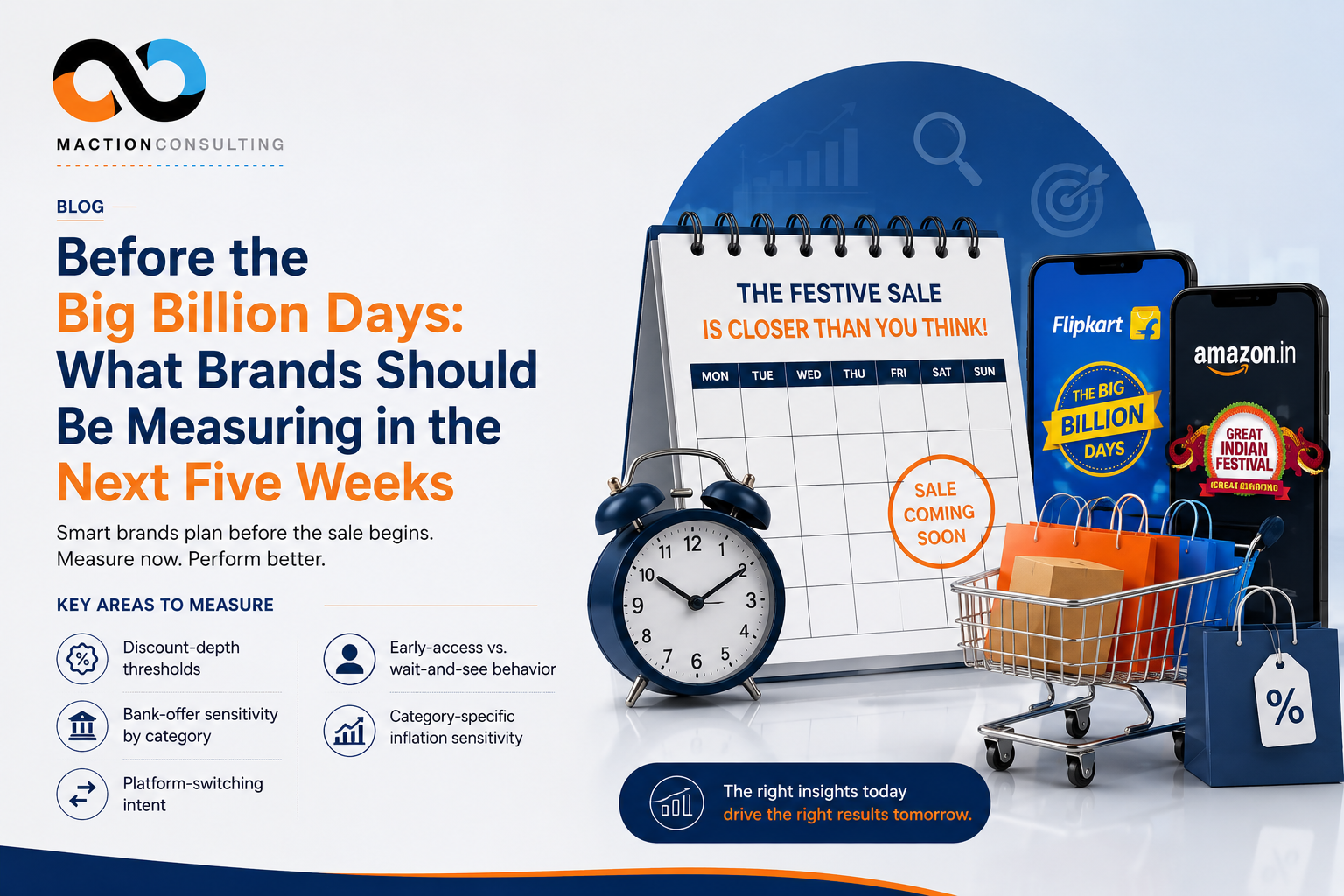

Flipkart’s Big Billion Days and Amazon’s Great Indian Festival haven’t been officially confirmed for 2026 yet, but both platforms are expected to open within days of each other in the last week of September, with early access windows for Plus and Prime members starting a day or two before. That’s roughly five weeks away. For most consumer brands, the sale itself gets the attention — the discounting, the bank tie-ups, the traffic spikes. The research window that actually determines how well a brand performs during those five to seven days is closing right now, quietly, while everyone else is still waiting for the official announcement.
Why the Pre-Sale Window Matters More Than the Sale Itself
Big Billion Days and the Great Indian Festival aren’t small events for the brands that participate — many generate 15-20% of their entire annual revenue in this single window, and the 2025 edition alone reportedly drew participation from over 600 million shoppers. Decisions about inventory allocation, discount depth, bank-offer partnerships, and which SKUs get featured placement are typically locked in weeks before the sale goes live, which means any research meant to inform those decisions has to happen now — not once the sale dates are confirmed and the pressure to finalise everything spikes.
This Year’s Sale Sits on Genuinely Different Ground Than Last Year’s
Last year’s festive season had a specific tailwind: the GST 2.0 rate cuts landed right at the start of Navratri, giving both platforms a genuine “prices just dropped” story to sell alongside their usual discounts. This year’s sale window opens against a meaningfully different backdrop — retail inflation just hit a 19-month high of 4.45% in July, forecasters are projecting it to cross 5% by September, and several manufacturing hubs tied to US export tariffs are absorbing real income shocks. None of that means demand collapses — India’s GST collections have stayed strong through mid-2026 — but it does mean the assumptions that made last year’s festive sale plan work may not transfer cleanly to this year’s, and that’s exactly the kind of gap pre-sale research exists to catch.
What Actually Needs Testing Before the Dates Are Announced
- Discount-depth thresholds, not just discount presence. With household budgets tighter than last year in several categories, the discount percentage that reliably triggers a purchase may have shifted. A category that converted well at 20% off last year may now need a deeper cut, or may convert just as well with a smaller discount paired with easier EMI terms — that’s a testable question, not a guess.
- Bank-offer sensitivity by category. Instant bank discounts (typically 10% via a small number of partner banks) are a major conversion driver on both platforms, but sensitivity varies sharply by category and price point. Understanding which categories in your portfolio are genuinely bank-offer-dependent versus which would convert anyway is worth knowing before finalising co-marketing spend with a banking partner.
- Platform-switching intent. With Big Billion Days and the Great Indian Festival now running concurrently rather than sequentially, a meaningful share of shoppers price-compare across both platforms before buying. Understanding whether your category’s shoppers are platform-loyal or price-driven changes how aggressively you need to match a competitor’s placement on the rival platform.
- Early-access versus wait-and-see behaviour. Plus and Prime members get 24-hour early access, but not every early-access shopper buys immediately — some use the window to browse and compare, then wait for the main sale. Knowing which of your categories see genuine early-access urgency versus which see early browsing but delayed purchase changes how inventory should be staged across the sale’s first 48 hours.
- Category-specific inflation sensitivity, given the state-level and rural-urban inflation divergence already showing up in July’s data — a brand with concentrated exposure to higher-inflation states or rural markets may see a different response to the same discount than one concentrated in more insulated urban markets.
The Cost of Skipping This Step
Most brands don’t skip festive-season planning entirely — they skip the research that should inform it, defaulting instead to repeating last year’s discount depth and bank partnerships because the sale calendar moves fast once dates are confirmed and there’s rarely time to test assumptions once the countdown starts. The result is a plan that’s internally consistent but built on a demand environment that’s already changed since it was last validated. A five-week research window, run now while the official dates are still pending, is enough time to catch a mismatch before it becomes a live inventory or pricing decision.
Frequently Asked Questions
Q: When are Flipkart Big Billion Days and Amazon Great Indian Festival 2026?
As of August 2026, neither Flipkart nor Amazon has officially confirmed exact dates for their 2026 festive sales. Both are expected to open in the last week of September, with Plus and Prime early-access windows starting approximately 24 hours before the main sale. Brands should plan research now — before confirmation — as decisions about inventory, discount depth, and bank partnerships are typically locked weeks before official dates drop.
Q: Why does pre-sale research matter for Big Billion Days?
Many consumer brands generate 15–20% of their annual revenue in the Big Billion Days and Great Indian Festival window. Decisions about inventory allocation, discount depth, bank-offer partnerships, and featured SKU placement are finalised weeks before the sale goes live. Research commissioned after the dates are confirmed rarely produces actionable findings in time to influence those decisions.
Q: How is the 2026 festive sale environment different from 2025?
Last year’s sale had a specific tailwind — GST 2.0 rate cuts landed at the start of Navratri, giving platforms a genuine “prices just dropped” story. This year, retail inflation hit a 19-month high of 4.45% in July, forecasters project it crossing 5% by September, and several manufacturing hubs are absorbing income shocks from US export tariffs. The demand environment is materially different and last year’s assumptions may not transfer.
Q: What should brands test before Big Billion Days 2026?
Five research priorities: discount-depth thresholds to understand whether conversion triggers have shifted from last year; bank-offer sensitivity by category; platform-switching intent between Flipkart and Amazon; early-access versus wait-and-see purchase behaviour; and category-specific inflation sensitivity given the rural-urban and state-level divergence already showing in July’s CPI data.
The Bigger Point
The Big Billion Days and Great Indian Festival dates will be confirmed within the next few weeks, and once they are, most brands’ attention shifts entirely to execution — finalising creative, locking inventory, briefing sales teams. The window to actually test pricing, discount-depth, and platform assumptions against this year’s genuinely different consumer environment is open right now, before that shift happens. Brands that use it tend to walk into the sale with a plan built on this year’s data rather than last year’s.
If you need a fast pre-festive read on discount sensitivity, platform behaviour, or category-level demand before the sale dates are locked, talk to our research team at Maction.


One thought on “Before the Big Billion Days: What Brands Should Be Measuring in the Next Five Weeks”