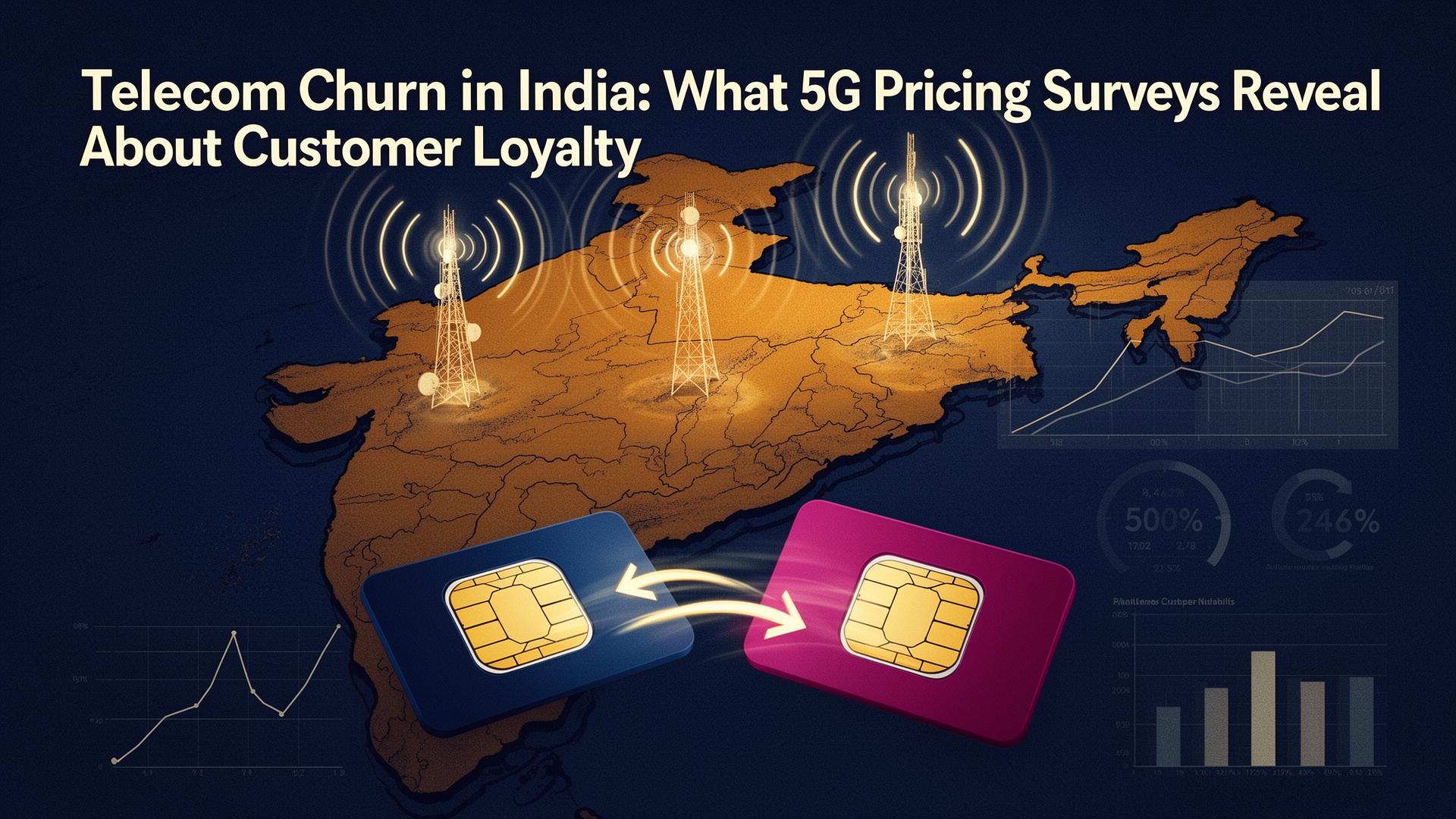

India’s telecom industry is entering its most competitive phase in a decade. With Reliance Jio, Airtel, and Vi rolling out 5G at varying speeds and price points, operators are no longer competing only on coverage—they are competing on perceived value. The first round of tariff hikes in mid-2024, followed by 5G monetization attempts in 2025, has reopened a question every CMO is asking: how loyal are Indian mobile subscribers really?
Recent telecom churn research in India suggests the answer is more nuanced than headline porting numbers indicate. Mobile Number Portability (MNP) requests crossed 11.9 million per month in early 2025, according to TRAI, yet net subscriber movement between the top three operators remained narrow. Subscribers are switching, but often within familiar brand ecosystems, and almost always in response to price-value mismatches rather than network failures alone.
For telecom marketers, the implication is sharp. Churn is no longer a coverage problem—it is a pricing perception problem. And 5G pricing surveys are becoming the single most important diagnostic tool to understand it.
Why Churn Is Rising Despite 5G Investment
Operators have collectively invested over ₹3 lakh crore in 5G spectrum and rollout, yet ARPU growth has not matched capex. The reason surfaces clearly in consumer research: most users do not yet perceive 5G as a paid upgrade.
Key drivers of rising churn include:
- Tariff fatigue after consecutive 15–25% hikes
- Weak 5G differentiation between Jio and Airtel in user perception
- Bundling confusion around OTT, data rollover, and family plans
- Postpaid migration friction, especially in tier-2 and tier-3 cities
- Enterprise dissatisfaction with SLAs on fixed wireless access
When subscribers cannot articulate what they are paying extra for, loyalty erodes silently—long before a port-out request is filed.
What 5G Pricing Surveys Are Actually Revealing
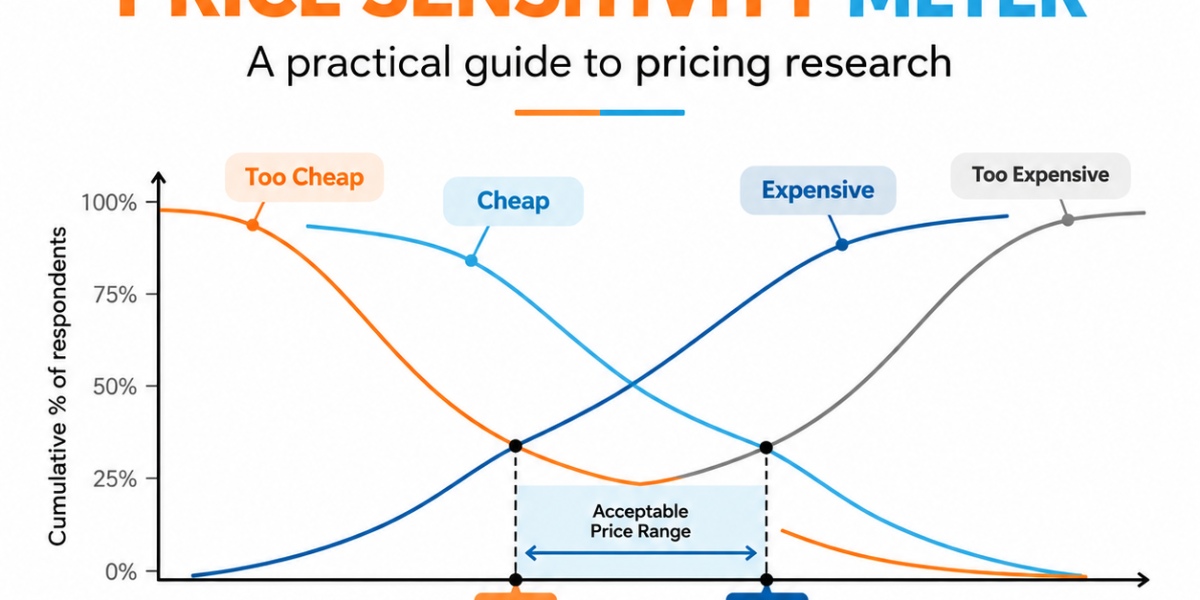
A well-designed 5G pricing survey goes beyond willingness-to-pay. It isolates the trade-offs subscribers make between speed, data volume, content bundles, and brand trust. Findings from recent syndicated and custom studies across metro and non-metro India point to four consistent patterns:
- Price elasticity is asymmetric. Users tolerate hikes up to ~₹50/month on prepaid before considering switching; beyond ₹75, intent-to-port doubles.
- 5G-only plans underperform. Subscribers prefer plans where 5G is “included,” not “premium-priced.”
- OTT bundling drives stickiness more than speed. A Netflix or Hotstar tie-in reduces churn intent by up to 30% in the 18–34 cohort.
- Trust gaps persist for Vi. Brand perception, not network quality alone, explains a measurable share of outflow.
These are exactly the insights that cannot be captured from billing data or NPS scores alone. They require structured telecom market research with conjoint analysis, MaxDiff, and segmentation modeling.
Customer Loyalty Is Now a Behavioral Construct
Traditional loyalty metrics—tenure, recharge frequency, NPS—are increasingly poor predictors of actual mobile network switching in India. Modern telecom customer loyalty frameworks combine three layers:
- Attitudinal loyalty: Brand affinity and recommendation intent
- Behavioral loyalty: Recharge consistency, plan upgrades, add-on usage
- Economic loyalty: Share of wallet versus secondary SIMs
Dual-SIM penetration in India remains above 70%, meaning churn often begins as silent substitution before becoming a full port-out. Surveys that track secondary SIM behavior catch this drift 3–6 months earlier than CRM systems do.
Case Study Snapshot: Decoding Port-Out Intent in a Tier-1 Circle
A leading telecom operator commissioned a structured pricing and loyalty study across a high-ARPU metro circle following a tariff revision. The research combined a 2,400-respondent quantitative survey, a discrete choice experiment on 5G plan configurations, and qualitative depth interviews with recent port-outs.
The findings reframed the operator’s retention strategy:
- 41% of “at-risk” subscribers cited plan complexity, not price, as the primary irritant
- A simplified three-tier 5G structure tested 22% higher on purchase intent than the existing seven-plan grid
- OTT bundling moved retention intent more than a ₹30 price cut would have
- Postpaid migration offers worked best when framed as “family plans,” not individual upgrades
The operator restructured its 5G portfolio within a quarter, reducing port-out requests in the circle measurably over the next two billing cycles.
Actionable Insights for Telecom Operators
For Indian telecom leaders, the path forward is less about price wars and more about precision. Practical recommendations grounded in current research:
- Run quarterly 5G pricing surveys, not annual ones—elasticity shifts fast
- Segment by usage archetype, not just ARPU band
- Track secondary SIM behavior as a leading churn indicator
- Test plan architecture using conjoint before launch, not after
- Measure brand trust separately from network satisfaction
- Build retention triggers around bundling, not discounts
Operators that institutionalize continuous consumer listening will outperform those relying solely on internal billing analytics.
Frequently Asked Questions
What is driving telecom churn in India in 2025?
Churn is being driven by a combination of tariff hikes, weak perceived differentiation between 5G offerings, and growing dual-SIM substitution. Subscribers increasingly evaluate operators on bundled value—OTT, data rollover, and family plans—rather than network speed alone. Research consistently shows that price-value mismatch, not network failure, is the dominant trigger for port-out requests.
Which telecom customers are most likely to switch providers?
Subscribers who perceive poor value for money, experience plan complexity, or use multiple SIM cards are generally more likely to switch providers than highly engaged customers with bundled services.
How do 5G pricing surveys help telecom operators?
A 5G pricing survey quantifies willingness-to-pay, price elasticity, and feature trade-offs across subscriber segments. Using techniques like conjoint analysis and MaxDiff, it reveals which plan attributes—speed, data, OTT bundling, family sharing—actually drive purchase intent. This allows operators to design plan architectures that maximize ARPU without inflating churn risk.
Is customer loyalty in Indian telecom measurable beyond NPS?
Yes. Modern telecom customer loyalty frameworks combine attitudinal, behavioral, and economic loyalty signals. Tracking secondary SIM usage, recharge consistency, add-on adoption, and brand trust provides a far more predictive view than NPS alone. These composite indicators detect silent churn months before MNP requests appear.
How often should telecom operators conduct churn and pricing research?
Given how quickly tariff perceptions and 5G adoption are evolving, leading operators are moving from annual to quarterly tracking. Continuous pricing surveys and rolling churn diagnostics allow rapid course correction—particularly around tariff revisions, new plan launches, and competitive moves by rivals.
How Maction Can Help
Maction Consulting partners with leading telecom operators across India to design and execute rigorous telecom market research programs—covering 5G pricing studies, churn diagnostics, brand health tracking, customer experience measurement, and B2B enterprise research. Our capabilities span conjoint and MaxDiff modeling, segmentation, discrete choice experiments, and continuous tracking dashboards. Whether you are repositioning a 5G portfolio, defending share in a high-ARPU circle, or rebuilding postpaid loyalty, our research teams translate consumer signals into commercial decisions you can act on this quarter.
The Takeaway
The Indian telecom market is shifting from a coverage war to a value perception war. Tariff hikes and 5G monetization have made subscribers more price-aware, more bundle-conscious, and more willing to switch silently through dual SIMs before formally porting out. Operators that invest in structured telecom churn research in India—anchored in continuous 5G pricing surveys and modern loyalty frameworks—will be best positioned to protect ARPU, reduce port-outs, and build durable customer relationships in the 5G era.