
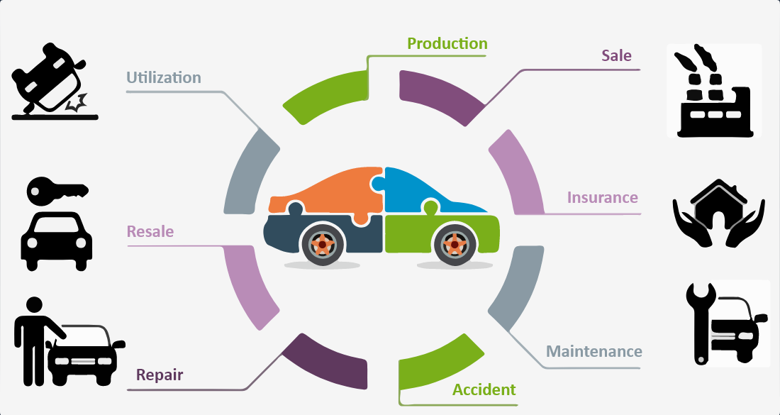

The automotive story in 2026 isn’t “EVs versus everything else” anymore. It’s software, AI, and a rebalanced global supply chain — with electrification as one thread in a much bigger transformation.
1. Software-defined vehicles have overtaken EVs as the industry’s core narrative
Well over half of automotive development teams worldwide are now deploying software-defined vehicle (SDV) architectures — centralized computing, over-the-air updates, and zonal electronics replacing the old model of dozens of separate ECUs. For OEMs, this shift enables faster feature rollouts and ongoing post-sale monetization, instead of value ending at the point of sale.
2. EV growth is real, but the pace has moderated
Global battery-electric vehicle sales grew strongly through 2025, yet the industry enters 2026 with slower EV growth alongside rising software integration and a renewed focus on hybrids, as automakers respond to affordability pressure in key markets. This looks less like a retreat from electrification and more like a recalibration — hybrids as a bridge, not a detour.
3. Chinese OEMs are now a global growth engine, not a domestic story
Whether suppliers participate in Chinese OEM global programs has become one of the defining strategic questions of 2026, as Chinese automakers increasingly anchor demand for next-generation electronics, ADAS, and EV powertrain systems worldwide. Suppliers and researchers tracking this market can no longer treat China as separate from global demand forecasting.
4. AI moves from infotainment gimmick to core vehicle function
Voice control and navigation assistants were the visible first wave of in-car AI. The next wave is quieter but more consequential: predictive maintenance, driver monitoring, and safety systems increasingly built on AI, deepening integration into software-defined vehicle platforms over time.
5. Consumer trust in vehicle data is the trend automakers can’t engineer their way around
Recent industry consumer research shows a majority of drivers are uneasy about data collected from synced devices, in-cabin cameras, and location tracking. That’s a research and communications problem as much as an engineering one — every new connected feature now needs a trust story, not just a spec sheet.
6. Over-the-air updates are starting to change purchase cycles
A notable share of consumers now say they’d keep a vehicle longer if it kept receiving meaningful software updates — a signal that software longevity is becoming a real factor in replacement decisions, alongside traditional depreciation and reliability considerations.
What this means for research and strategy teams
Automotive brands can no longer research “the car” in isolation from the software, data-trust, and ownership-experience layers wrapped around it. Positioning, pricing, and retention research all need to account for a buyer weighing OTA update cadence and privacy posture alongside horsepower and range.
Where Maction fits
Maction works with automotive and mobility brands to track these shifting buyer priorities — from EV-versus-hybrid consideration sets to trust attitudes toward connected vehicle data.
Tracking how buyer priorities are shifting in your market? Let’s talk about a research program built for where the industry actually is in 2026.




I don’t think the title of your article matches the content lol. Just kidding, mainly because I had some doubts after reading the article.
I don’t think the title of your article matches the content lol. Just kidding, mainly because I had some doubts after reading the article.