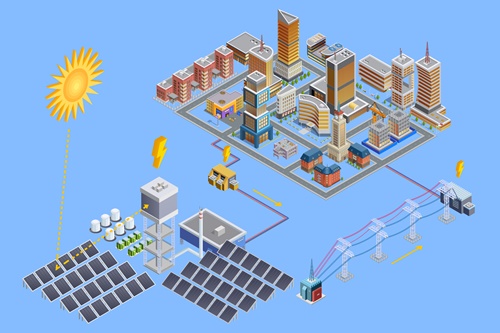

India’s ambitious 500 GW renewable target by 2030 has placed the nation at a global crossroads of energy transition. However, as of early 2026, a significant paradox has emerged: while technology costs are plummeting, project timelines are stretching. The primary culprit? Land acquisition bottlenecks.
To navigate these hurdles, a strategic shift is underway. Of the 55 solar parks approved under the MNRE’s flagship scheme, 33 solar parks are now being developed through a CPSU-State partnership model. This collaborative approach aims to de-risk utility-scale solar challenges by leveraging state authority to secure the 4–7 acres required per megawatt (MW).
Why Land Acquisition Is a Critical Barrier to Solar Park Development
A cluster analysis of stalled projects reveals three distinct categories of land-related risks that renewable investors must factor into their risk assessment:
- Legal & Fragmented Ownership: In many states, land records remain non-digitized, leading to “title clouds” where a single 500-acre parcel might have hundreds of legal claimants.
- Environmental & Biodiversity Overlap: The “Great Indian Bustard” (GIB) conflict in Rajasthan and Gujarat has become a textbook case of utility-scale solar challenges, where transmission lines face mandatory undergrounding to protect endangered species, skyrocketing costs.
- Socio-Economic Resistance: As land is a “State Subject” under the Indian Constitution, local opposition regarding grazing rights (Oran lands) or fertile soil conversion often leads to protracted litigation.
Case Study 1: The “Lease Model” Success in Pavagada, Karnataka
The 2,050 MW Pavagada Solar Park serves as a gold standard for bypassing land acquisition bottlenecks. Rather than outright purchase—which often triggers local displacement fears—the government implemented a long-term lease model.
- The Strategy: Thousands of farmers in a drought-prone region leased their land to the state for 25–30 years.
- The Result: Farmers retained ownership while gaining a steady, inflation-indexed rental income. By removing the “permanent loss of asset” fear, the project avoided the standard 16-month delay typically seen in land aggregation, providing a clear risk assessment win for investors.
Case Study 2: The CPSU-State JV in Rajasthan (2025-26)
Facing new, stricter land laws in 2025, private developers saw project gestation periods nearly double. In response, NTPC Green Energy and SJVN formed Joint Ventures (JVs) with the Rajasthan government.
- The Strategy: Under this CPSU-State partnership, the state government treats the land as its equity contribution. This “plugs” the project directly into the state’s administrative machinery, fast-tracking non-agricultural land conversion and environmental clearances.
- The Result: These JVs have managed to secure contiguous land parcels even in sensitive zones by offering state-backed guarantees and community-inclusive benefits, effectively insulating the project from the “fragmented ownership” cluster of risks.
Frequently Asked Questions
What are the main challenges in solar park development in India?
The major challenges include acquiring large contiguous land parcels, resolving land ownership issues, obtaining necessary approvals, addressing community concerns, and ensuring that transmission infrastructure is developed on time. The Ministry of New and Renewable Energy has specifically identified land acquisition and transmission development as major implementation challenges.
Why is land acquisition difficult for solar projects in India?
Large-scale solar projects require substantial contiguous areas of land. Developers may encounter fragmented ownership, unclear or disputed titles, competing land uses, land-use conversion requirements, and local community concerns. These factors can increase project timelines and development risk.
How much land is required for a solar park in India?
Land requirements vary depending on technology, terrain, project design, and infrastructure. Government material on solar parks has cited approximately 4–5 acres per MW as a general requirement, although actual requirements can differ by project.
How can developers reduce land acquisition risks for solar projects?
Developers can reduce risk by conducting detailed land-title due diligence, identifying contiguous parcels early, assessing community and environmental constraints, coordinating land procurement with transmission planning, and considering structured lease or government-supported development models.
What role do solar parks play in reducing project development challenges?
Solar parks can provide developers with access to developed land and shared infrastructure such as roads, transmission systems, water, drainage, and other facilities. This can reduce some of the site-development and infrastructure burdens associated with individual projects.
How does land acquisition affect renewable energy investment in India?
Land-related delays can increase project development timelines, financing costs, and execution uncertainty. Investors therefore need to evaluate land ownership, regulatory, community, environmental, and transmission risks as part of the overall project feasibility assessment.
Navigating the Future: Investor Roadmap
For renewable energy investment in India, the era of “easy land” is over. Success in 2026 and beyond requires a move away from standalone private aggregation toward the Solar Power Park Developer (SPPD) mode.
Investors should prioritize projects that utilize government wasteland or participate in CPSU-led joint ventures, as these models provide a “single-window” buffer against the administrative friction of state revenue departments.
As India scales toward its 500 GW renewable target, the ability to analyze land not just as a physical asset, but as a socio-legal cluster, will be the ultimate differentiator for successful project commissioning.




Good Article